






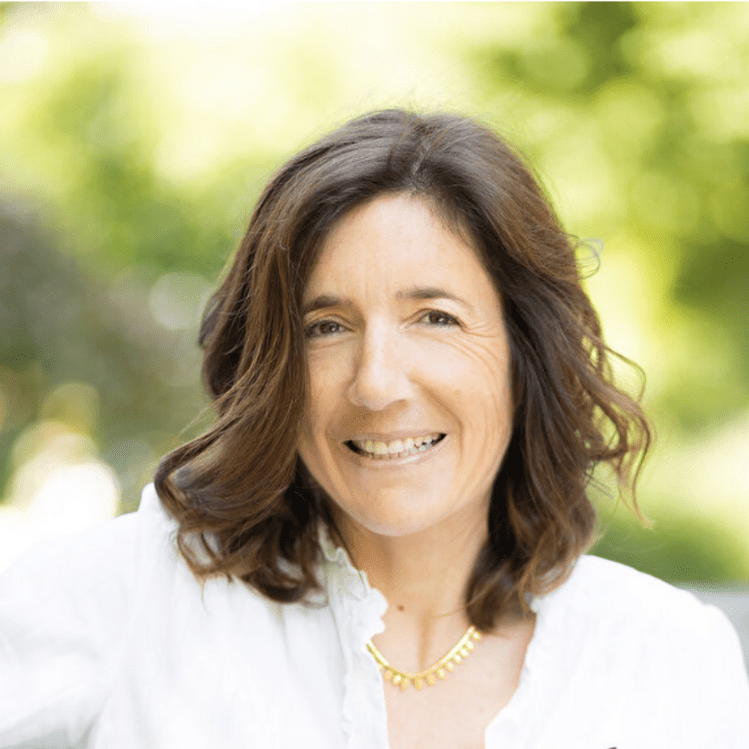
When Stéphanie Denet entered the traditional, highly technical world of meat wholesale, she was an outsider. Armed with marketing savvy, relentless determination, and a knack for building trust, she quickly turned obstacles into opportunities—securing scarce supplies, winning over clients, and redefining what it means to succeed in a male-dominated industry.
“Be yourself, be expert, be ambitious—authenticity opens doors.”
When you first started SD Appro, what were the biggest hurdles in establishing credibility with clients and suppliers in the meat industry?
The first challenge was obvious: I didn’t come from the meat industry at all. It’s a traditional, highly technical sector, often reserved for those who already know its codes. I arrived as an outsider.
Fortunately, I did have one entry point: thanks to my previous job selling kitchen equipment, I already knew the major restaurant chains. That allowed me to identify the right contacts — the meat buyers — and understand their expectations.
At the same time, I quickly built a partnership with French wholesalers, who gave me credibility with future clients and taught me the language and technical terms of the sector. That support was crucial.
With foreign suppliers, things were almost easier. Many were not native English speakers, so the fact that I didn’t yet master their jargon — I even remember saying “cadaver” instead of “carcass” — wasn’t an issue. What mattered was my reliability and responsiveness.
For my very first client, I committed myself 200%: finding the right product, preparing the full specification file, microbiological analyses, certifications, quality questionnaires, translations from Hungarian, last-minute traceability tests… I handled everything, often under pressure, and succeeded step by step. As a result, the client approved and referenced my supplier, which was a real turning point.
And the context worked in my favour: we were in the middle of a shortage. Once I could guarantee a supply of goose fat, buyers came almost spontaneously. All I had to say was:
“Are you looking for goose fat?”
and the doors opened.
How did your marketing background shape the way you present and sell your products to restaurant chains?
My marketing background shaped my approach from day one. It taught me that you never simply sell a product: you sell a story, a solution, and a relationship of trust.
With restaurant chains, I have always applied this mindset. I don’t just offer a cut of meat or a poultry by-product; I present a coherent package:
- controlled origin,
- consistent quality,
- supply security,
- price stability,
- and an ability to anticipate market fluctuations.
Marketing also taught me to put myself in the buyer’s shoes. Their constraints are not technical — they are economic, operational, and linked to continuity. My role is to turn a raw product into real added value for their menu, their margin, and their peace of mind.
Finally, my marketing culture pushed me to polish every detail: how I present my suppliers, the clarity of my documents, the transparency of processes, even the tone of my emails. In a sector where communication is often dry or highly technical, this approach made me stand out.
In short, marketing taught me to make a complex and unglamorous universe simple, clear, and desirable.
What role did networking play in identifying the first suppliers of duck and goose fat, and how do you maintain those relationships today?
Networking was absolutely decisive in the early days of SD Appro. Without it, I would never have found my first suppliers of goose and duck fat. I mobilised all my contacts in Central Europe — especially in Hungary and Poland — countries that are major producers but often overlooked from France. My network, built over years abroad, gave me direct access to decision-makers, avoiding slow or saturated channels.
My first reliable supplier wasn’t found by chance: it was the “contact of a contact,” someone trusted because they had been recommended. That’s the power of a network: shortening distances, bypassing barriers, and gaining access to the right people — essential in a business built on trust.
Today, I maintain these relationships very actively. I stay in constant contact, meet suppliers at international fairs, visit their sites, and above all, I remain transparent and loyal even when things get complicated. I respect deadlines, anticipate volumes, communicate upcoming needs, and defend their interests as much as my clients’.
This loyalty creates a virtuous circle: they prioritise me over other customers, reserve volumes for me during shortages, and inform me first about production changes.
Networking didn’t just help me get started — it remains one of the pillars of SD Appro’s stability and performance today.
How do you stay ahead of trends and market changes in a traditional industry like meat wholesale?
I don’t have a crystal ball, but I see shortages forming very early. In poultry, for example, I am alerted almost in real time when new avian flu outbreaks appear in Europe. I talk daily with suppliers who tell me about changes in their placements, which of course impact future production months later. I also closely track my clients’ purchasing trends — new recipes, shifting needs — because these signals are often the first signs of a market move.
For beef, I monitor structural trends — such as this year’s 3% drop in production due mainly to weather conditions, which reduced fodder and had a direct impact on prices, and therefore on the rise of imports.
In short: I stay connected, I listen, and I analyse. Trends rarely appear suddenly; they build up through dozens of weak signals.
Can you share an example of a business setback that taught you a crucial lesson about resilience or strategy?
Yes — and it was probably the most difficult episode since I created SD Appro. I advanced a significant amount of money to a foreign supplier who was having cash-flow issues, so he could produce the goose fat a client urgently needed. It was a gesture of trust, a way to secure supply in the middle of the avian flu crisis.
But the supplier neither delivered nor reimbursed me. It was the first time anything like this had happened. Beyond the financial loss, I felt betrayed, and it immediately damaged my relationship with the client waiting for the product.
The lesson was crystal clear: you never break the fundamental rules of this business. I should never have lent money to a supplier without strong financial reliability. In international trade, intuition matters — but discipline matters even more.
Despite this setback, I saved the client relationship: I mobilised my network, found another producer in full shortage period, and kept my commitment. It strengthened my credibility, but at the cost of enormous stress and a financial loss.
Strategically, this changed everything. Today, I always diversify: at least two reliable suppliers for each product, so there is always a plan B. It protects my clients, creates healthy competition, and prevents dependency on a single partner.
The lesson? Trust is essential — but it must rest on solid structures, clear rules, and rigorous diversification.
How do you decide which new products or markets to pursue while balancing risk and potential reward?
Very often, I enter a new market when a shortage is looming. These are the moments when needs shift, industries seek alternatives, and opportunities open for those who anticipate early.
A current example: more and more manufacturers are buying lean duck livers — non-fattened — to make duck mousse. With avian flu and low placement levels expected next year, we already know there won’t be enough raw material. A shortage is certain.
So I secured the market: I booked year-round quantities with my suppliers, without fixing the price yet, to guarantee stock while keeping flexibility on pricing.
What’s interesting is that once supply is secured and clients test the product, orders quickly become recurring. They value regularity, quality, and protection from market volatility.
This is what I aim for: turning a tension-driven opportunity into a long-term, structured relationship. I’m not looking for a quick win — I’m building sustainable solutions.
In running a business that spans multiple countries, what tools or systems have helped you manage operations efficiently?
Running a business simultaneously in France, Poland, Hungary, Germany, and Ireland requires impeccable organisation. Early on, I realised my strength wouldn’t be size, but structure.
I implemented simple, extremely efficient tools:
- rigorous documentation tracking:
supplier files, certifications, EU numbers, IFS/BRC, specifications - lot-level traceability
- systematic archiving of microbiological analyses
- historical data on volumes and prices
I can retrieve any information in seconds, which reassures partners — especially in international trade.
I rely on fast communication tools — WhatsApp, email, instant document sharing — essential in a sector where a 9 a.m. answer can decide a noon loading.
I also use a solid accounting system capable of handling multiple tax frameworks and complex financial flows (prepayments, credit notes, weight adjustments).
And I built an internal supplier database including:
- available volumes
- production periods
- historical prices
- identified risks
- reliability indicators
These tools allow rapid arbitrage between countries and make me extremely responsive — something larger structures struggle to do.
Ultimately, my efficiency relies less on technology than on a method: rigour, full visibility, and fast decision-making.
How do you ensure that your personal values are reflected in the way SD Appro operates?
My values are at the heart of SD Appro. In this trade — built on trust, responsibility, and promises kept — you cannot pretend. You must be aligned and consistent.
The first value is transparency. I communicate openly, even when the news is difficult. If there’s a risk or uncertainty, I inform the client immediately.
The second is responsibility. A truck arriving late doesn’t just cause a logistical delay — it can shut down a production line. I take every commitment extremely seriously.
The third is loyalty. I treat suppliers as true partners. I respect their constraints, defend their interests, and support them through difficulties. This loyalty is why they prioritise me in times of shortage.
And finally: gratitude. I am deeply thankful to all the people who make this industry work — clients and their teams, logistics staff, drivers, quality controllers, cutting-plant workers, producers abroad. No company succeeds alone. Every pallet delivered is the result of collective work.
I make sure SD Appro embodies my values by turning respect, loyalty, transparency, and gratitude into daily practices, not slogans.
What advice would you give women looking to enter industries where they are underrepresented?
Don’t try to fit into the dominant model. In very masculine sectors, the temptation is to blend in. I did it myself at first: trousers, minimal makeup, never daring to wear a dress — as if femininity threatened credibility.
Over time, I realised the opposite: being fully myself makes me stronger. Today, I show up exactly as I am — feminine, authentic, confident — and it has never been an issue.
And I must say: I have only ever met genuinely kind people in the meat sector. It’s far from the harsh, closed world people imagine. The professionals are passionate, approachable, and genuinely delighted when someone takes interest in their craft.
My advice is simple: stay authentic, stay feminine, stay kind. Courtesy and warmth are powerful tools — not weaknesses.
Then comes expertise. Mastering technical details — volumes, pricing, logistics — closes the door to condescension. You can be feminine and extremely competent; the two reinforce each other.
And finally: don’t apologise for being ambitious. In under-represented sectors, no one will hand you your place — you must take it with confidence.
Be yourself, be expert, be kind, be ambitious. Authenticity opens more doors than one imagines.
How do you celebrate successes with your team, and how important is recognition in fostering growth?
Recognition is not optional — it is essential for collective success. SD Appro is a lean structure, but behind every truck delivered, there are many people at work: logisticians, drivers, quality teams, cutting plants, administrative staff… Nothing happens alone.
Celebrating success starts with valuing everyone’s contribution. When a project runs smoothly, when we secure volumes during a shortage, when a client renews their trust, I always take the time to thank the people involved. A message, a call, a gesture — simple things that matter enormously.
We also celebrate concretely: with a lunch, a coffee, or simply a shared moment to acknowledge the achievement. Small victories build cohesion and energy.
And I never forget that SD Appro’s success relies entirely on others’ success. I am deeply grateful to clients and their teams, logistics partners, drivers, processing plants, and producers across Europe. Without their reliability and commitment, nothing would function. It’s an orchestra.
Recognition means showing that I see the work, the effort, the dedication. It creates trust, motivation, and belonging. In a human-sized, agile company like mine, it’s an indispensable engine.